
 Authorized Dealer · Orange County
Confused about California
tint laws? Here is the real answer
I run a tint shop in Santa Ana and this conversation happens at my counter almost every day. Someone walks in asking for 20% all around, and I get to explain how California actually works: up front you can run 70%, which is a clear film and by far the most popular choice, and behind the driver there is no limit and no minimum, so you go as dark as you want. The windshield has its own rule, measured in inches from your seat instead of a percentage. This page is that whole conversation, written out.
One more thing we stand behind. Tint rules make people nervous, so we back our work with a ticket protection policy. If you get a qualifying tint citation on film we installed, you come back to us and we handle it under that policy. Ask us about it before your car goes in and you will know exactly where you stand.
Every window, one table
VLT means visible light transmission, the share of light that makes it through the glass. A higher number is a lighter window. Two numbers do most of the work in California: 70% up front, and no limit at all behind the driver. The windshield gets its own rule, measured in inches.
| Window | What the code allows | What that means in the shop |
|---|---|---|
| Windshield | A transparent strip along the top, as long as its bottom edge sits at least 29 inches above the driver's seat | On most cars that lands around the factory shade band, roughly the top four or five inches |
| Front side windows | 70%, using a clear colorless film rated 88% VLT or better | The popular choice, and it still kills heat and UV |
| Rear side windows | Excepted from the obstruction rule | No limit and no minimum. As dark as you want, 5% included |
| Rear window | Any darkness when the car has working outside mirrors on both sides | Nearly every modern car already qualifies |
| Medical exemption | A sun screening device on the front side windows with a signed letter from a physician and surgeon or an optometrist | Green, gray or neutral smoke, 35% VLT or lighter, and it has to be removable |
| Reflectivity and color | No mirror finish, no red or amber tones on the windshield strip | Chrome and colored films stay off the car |
Based on California Vehicle Code sections 26708, 26708.2 and 26708.5. Last reviewed August 2026.
70% up front, and
why people still love it
Up front you can run 70%, and that is what most of our customers go with. Section 26708(d) sets it out: the material on the two windows next to the driver is clear and colorless, at least 88% visible light transmission on its own, and the window with film applied stays at the federal 70% standard. Section 26708.5 says the same thing from the other direction, that film should not alter the color or cut light transmission.
So when a shop tells you 70% is the front window option in California, they are right, and the detail worth knowing is that it is a clear film rather than a shade. Darker numbers like 35%, 20% and 5% belong behind the driver.
Clear does not mean useless, which surprises people. A clear ceramic film up front still blocks the infrared that heats the cabin and 99% of UV. Your left arm stops cooking on the 55 in August and the glass looks close to stock. That is the setup I run on my own car.
- 70% is the front window standard, and the most popular request we get
- The film itself is clear and colorless at 88% VLT or better
- Darker shades live behind the driver, where there is no limit
- Clear ceramic gives you the heat rejection without the darkness
Is windshield tint legal
in California?
Partly, and the measurement is not what most people quote. Everyone repeats "top four inches," which is a decent rule of thumb but not the actual standard. Section 26708(c) says the bottom edge of the material has to sit at least 29 inches above the undepressed driver's seat, measured from a point five inches in front of the bottom of the backrest with the seat all the way back and all the way down. On a low sports car and a lifted truck that same rule produces two different strips, which is why we measure the car in front of us instead of cutting to a number.
The strip also has to stay honest optically. No opaque lettering, no red or amber tones, and it cannot throw more glare at oncoming drivers than the bare windshield would.
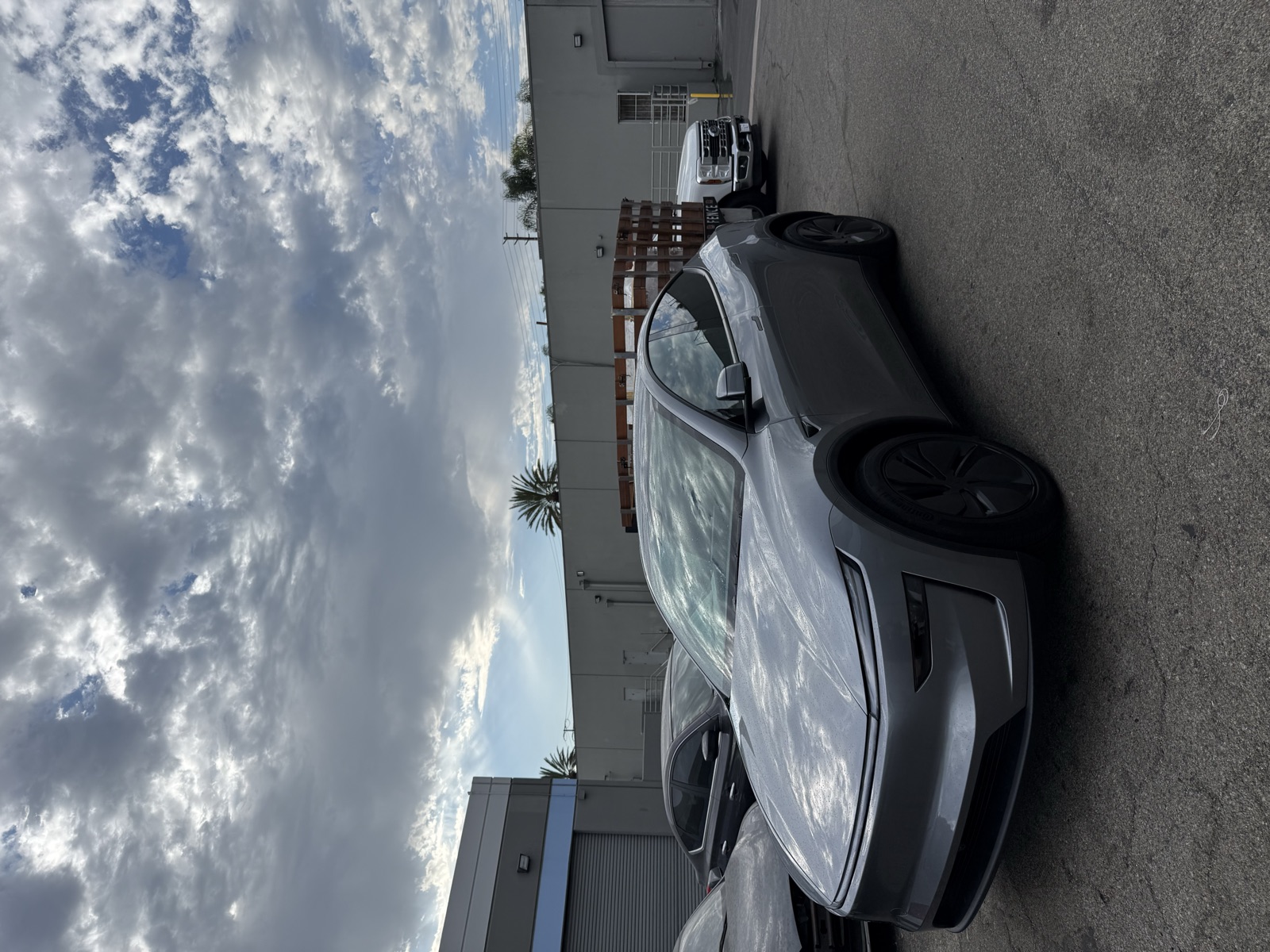
Full windshield film is a different conversation, and the version that works here is clear ceramic. It rejects a large share of infrared heat while the glass stays clear, so your view does not change and the cabin stops baking. Tesla owners ask about it constantly, since that big glass area turns a Costa Mesa parking lot into a greenhouse. Anything on a windshield still has to leave your view clean, so we talk through what a specific film does at night before we cut it.
- Top strip measured 29 inches above the seat, not a fixed four inches
- No red or amber tones, no opaque lettering
- No extra glare toward oncoming traffic
- Clear ceramic full windshield film blocks heat without darkening the glass
What each shade
actually looks like
Tap a percentage to see roughly how much light it lets through. Screens and lighting vary, so treat this as a guide rather than a color match. When you come in we hold real film samples against your own glass, which is the only comparison that settles it.
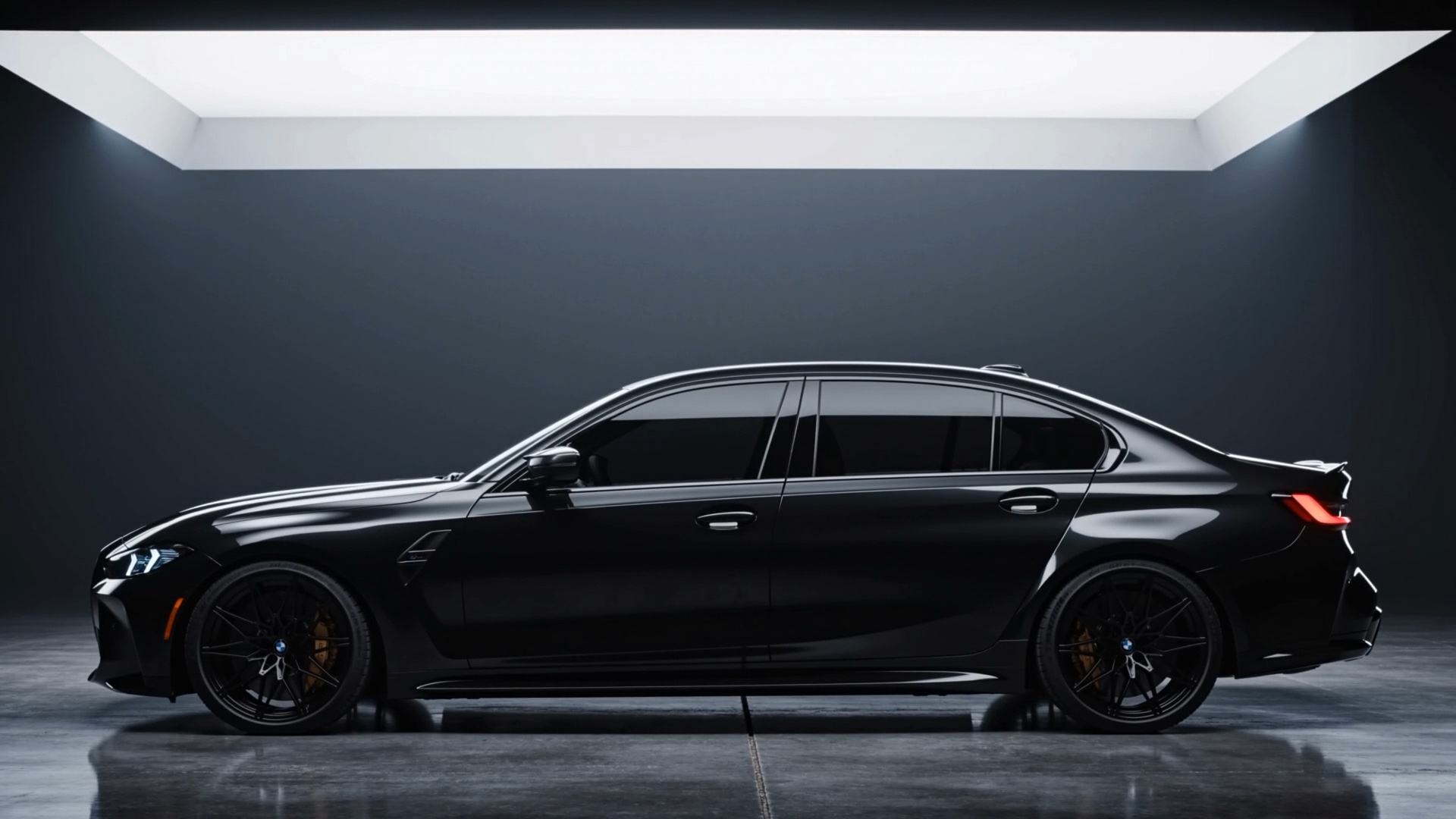
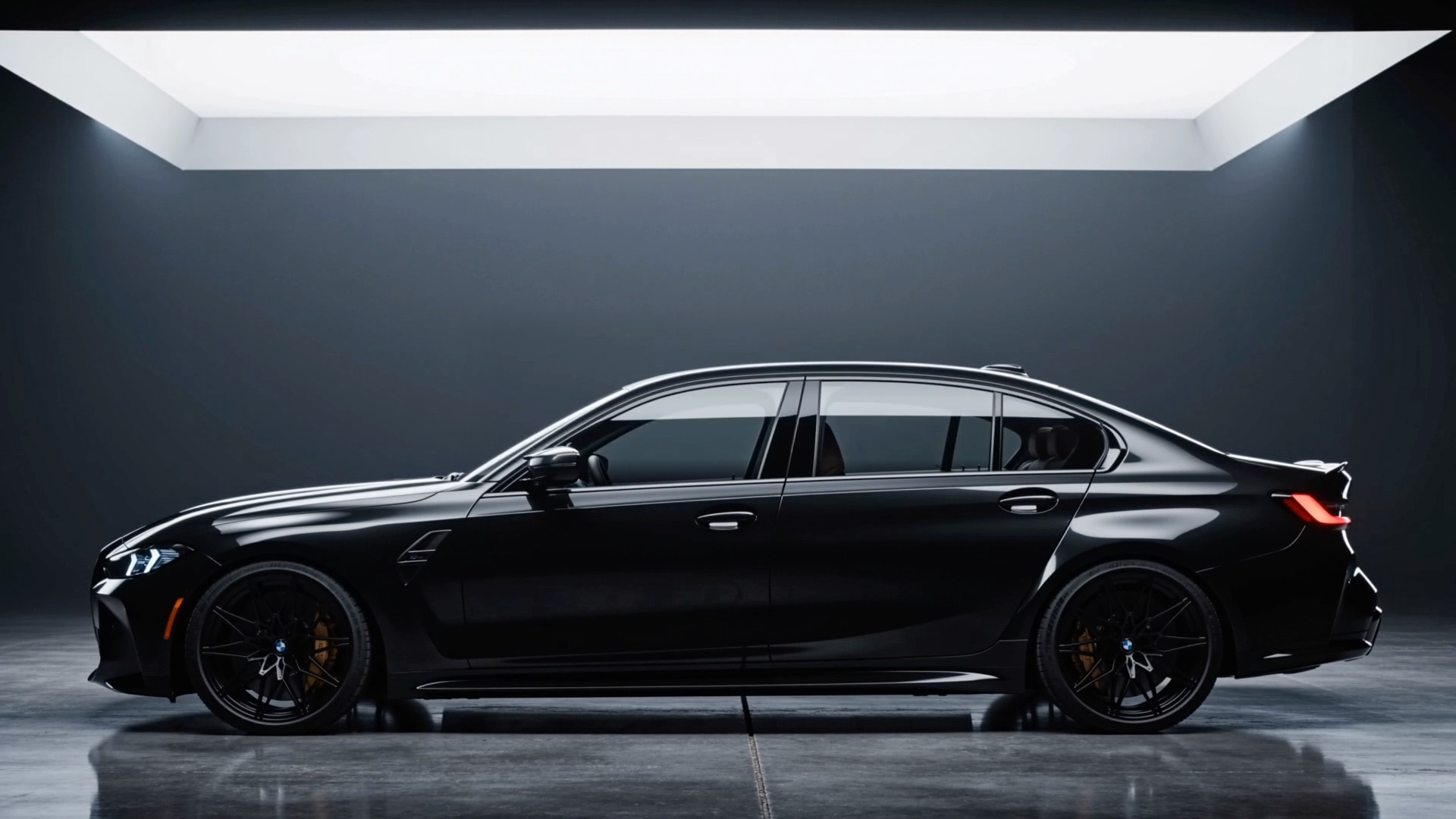
Same car, film on and off.
Drag the line across this M3 to see the rear glass tinted against untinted. Behind the driver there is no limit and no minimum, so this is entirely down to the look you want.
What most of our
customers actually pick
After enough cars you start to see the same three or four builds come back. The one we install most often is a clear 70% ceramic up front with 20% on the rear doors and back glass, factory shade band left alone up top. It reads as a blacked out car from the street, and because the film is ceramic on every window the heat rejection is even all the way around.
Drivers who want more privacy go 5% on the rear doors and back glass, which is wide open since there is no minimum back there. Parents with car seats ask for it constantly, and so does anyone whose dog rides in the back through Huntington Beach traffic. The tradeoff is night visibility when you reverse, which matters less now that every car has a backup camera but still matters backing out of a tight garage in Newport Beach.
Tesla owners are their own category. Model 3 and Model Y glass roofs pull in serious heat, so the conversation usually starts with the roof and windshield rather than the doors. Same with the luxury cars we see from Irvine and Newport, where the owner cares more about protecting a light interior from UV than about looking dark.
- Clear 70% front with 20% rear doors and back glass: our most common build
- 5% rear for maximum privacy, since nothing behind the driver has a minimum
- Tesla owners start with roof and windshield heat
- Light leather interiors get UV protection as the priority
How the exemption
really works
Start with the thing people waste the most time on: California has no DMV tint exemption form. Drivers search for one every week and it does not exist. What section 26708(b)(10) asks for is a letter or document signed by a licensed physician and surgeon certifying that you need to be shaded from the sun for a medical condition, or one signed by a licensed optometrist for a visual condition. The driver or the front seat passenger keeps that letter in the car.
The second half is the part almost nobody mentions. The exemption covers a sun screening device that meets section 26708.2, and that section has its own limits. Green, gray or neutral smoke in color, luminous transmittance no lower than 35%, reflectivity no higher than 35%, and it has to be held in place so it can be removed from the window. In other words, a doctor's letter does not unlock 5% limo tint on your front doors. It gets you to 35% on a removable device, which is still a real difference in the sun.
Bring the letter when you come in. We will read it, we will explain what it does and does not cover for your car, and we will build to it.
- No state form exists, a signed doctor's letter is the paperwork
- Physician and surgeon for medical, optometrist for visual
- Device capped at 35% VLT, green, gray or neutral smoke
- It has to be removable from the window
What happens if you
get pulled over
A tint stop in California is usually written as a correctable violation, the kind people call a fix-it ticket. You remove the film, get the correction signed off, pay the dismissal fee and the citation goes away. It can also be charged as a straight infraction with a larger fine attached, and how that plays out depends on the agency, the officer and the court. Nobody can promise you which version you get.
| Situation | How it usually goes |
|---|---|
| Correctable citation | Remove the film, get the correction signed, pay the dismissal fee. Cheap in money, annoying in time, and you lose the tint you paid for. |
| Charged as an infraction | A larger fine, no correction option. Less common in practice, but it happens and it is the court's call. |
| DMV points | Tint violations are equipment violations, so they generally do not add points to your record. Your insurance company is not the one writing the ticket. |
| Out of state cars | Driving through with tint that is legal at home is usually fine. Register the car in California and California rules apply to it. |
| Repeat stops | Same film, same problem, second time around. This is the scenario that makes people redo the job properly. |
Ticket protection,
backed by our shop
This is the part that sets us apart in Orange County. Most shops cut your film, take your money and wish you luck. We back the work with a ticket protection policy instead, so if you get a qualifying tint citation on film we installed, you come back to us and we take care of it under that policy. We go over the terms with you before your car goes in, which means you know exactly what is covered before we cut anything. What no shop can do is promise you how an officer or a court will decide, and anyone who tells you otherwise is selling something.
Do police actually
stop cars for tint?
Sometimes. That is the honest answer, and anyone who gives you a confident yes or no is guessing. Enforcement varies between agencies and between individual officers, and it varies by what else is going on with the car. Plenty of cars roll around Orange County with front windows darker than the code allows and never get looked at twice. Other drivers get stopped within a month.
What I can tell you from customers coming back with stories: a car that is otherwise clean and unremarkable draws less attention than one that already stands out. Tint stops often ride along with something else, a plate light out or a lane change. Dark film on the front doors is the detail that gets noticed, because anyone can see it from outside the car at a red light.
My position is simple. I will tell you exactly where each number puts you, build the setup you want with 70% up front and whatever you like in the back, and back the work with our ticket protection policy. If you want an honest read on your specific car, ask when you come in.
- Enforcement differs by agency and by officer
- Tint stops often accompany another reason for the stop
- Dark front doors are the most visible giveaway
- Our ticket protection policy stands behind the film we install
Why California drivers
keep tinting anyway
Knowing the rules is one thing. Sitting in a black leather seat in an Anaheim parking lot in August is another. Here is what people actually come to us for.
| Reason | What it looks like day to day |
|---|---|
| Heat | Infrared is what makes the cabin unbearable. Ceramic film blocks a large share of it, so the AC catches up faster and the car cools down quicker after work. |
| UV and interior | 99% of UV blocked. Dashes stop cracking, light leather stops going yellow, and a red interior stays red. |
| Kids and pets | Rear seat passengers get the direct afternoon sun. Tinted rear doors are legal at any darkness, which makes this the easiest problem on the list to solve. |
| Glare | The drive west on the 22 at 6pm speaks for itself. Less squinting, less fatigue. |
| Privacy | Laptops and gym bags stop advertising themselves through the glass at a Tustin trailhead. |
| Tesla glass roofs | Model 3 and Model Y roofs are a heat problem that no amount of AC fully solves. Roof film changes the car. |
| Comfort and resale | A protected interior shows better when you sell. Buyers notice a cracked dash immediately. |
Questions we answer
at the counter every week
Up front you can run 70%, using a clear colorless film rated 88% VLT or better. Behind the driver there is no limit and no minimum, so any shade is on the table. The windshield gets a transparent strip along the top instead of a percentage rule.
Behind the driver, yes, and it is one of our most common rear requests. Up front the number to run is 70%. 35% is also the darkest a sun screening device can be under the medical exemption, which is where the number comes up in most conversations.
Behind the driver, absolutely, and it is the Orange County favorite. 20% on the rear with a clear 70% up front is the build we install most often.
Yes on rear side windows and the back glass, as long as the car has working mirrors on both sides. There is no minimum back there, so limo is fair game. Up front, 70% is the number you want.
Yes. You run 70%, which is a clear colorless film, and it is what most of our customers choose for the front. Clear ceramic there blocks infrared heat and 99% of UV while the glass keeps looking close to stock.
A transparent strip along the top is allowed when its bottom edge sits at least 29 inches above the driver's seat, measured five inches in front of the bottom of the backrest with the seat all the way back and down. It cannot be red or amber and cannot add glare for oncoming drivers. For the full windshield, clear ceramic is the film that works, and it is a common request from Tesla owners.
The code measures from your seat rather than from the top of the glass, so it works out differently on a low coupe than on a lifted truck. On most cars the legal strip lands around four to five inches, close to the factory shade band. We measure the actual car before cutting.
Usually a correctable violation. You remove the film, have the correction signed off, and pay a dismissal fee. It can be written as a straight infraction with a bigger fine instead, and that call belongs to the officer and the court.
It is our answer to the thing everyone worries about. If you get a qualifying tint citation on film we installed, you come back to us and we handle it under the policy instead of leaving you on your own. We walk you through the terms before your car goes in so nothing is a surprise later. What we will not do is promise you how an officer or a court decides, because no shop controls that.
Tint falls under equipment violations, which generally do not add points to your DMV record. The cost lands in your time and in the film you have to strip off.
No. There is no state form and nothing to file. A signed letter from a licensed physician and surgeon, or from a licensed optometrist for a visual condition, is the whole paperwork. Keep it in the car.
The sun screening device has to be green, gray or neutral smoke, no darker than 35% luminous transmittance, no more than 35% reflective, and removable from the window. A doctor's letter does not unlock limo tint on the front doors.
Yes. Film on the back glass requires working outside mirrors on both sides that show the road at least 200 feet behind you. Almost every modern car already meets this without any changes.
Mirror finish films are not something we install. Red and amber are specifically out on the windshield strip. If a film looks like chrome from the outside, assume it is a problem.
Yes, and this surprises people. Heat comes mostly from infrared, not from visible light, so a clear film built to block infrared cuts cabin heat without darkening the glass. It also blocks 99% of UV, which is what ages your interior.
No. Ceramic film has no metal in it, so 5G, GPS, Bluetooth, toll transponders and key fobs all work normally. The signal problems people remember came from older metallized films.
Factory privacy glass is tinted during manufacturing rather than filmed, and it appears on rear windows where California does not limit darkness anyway. It also means adding film back there goes on top of already dark glass, so we usually go lighter than you would expect to hit the look you want.
All the time. We strip the old film and its adhesive without cooking your defroster lines, then install fresh film on clean glass. Purple, bubbling film is dyed film at the end of its life.
Give it three to five days. A little haze or a few small water pockets in the first days are normal and disappear as the film cures.
No. The Vehicle Code is statewide, so the rule is identical in Santa Ana, Irvine, Anaheim, Tustin, Costa Mesa, Newport Beach and Huntington Beach. What changes city to city is how actively it gets enforced, and that shifts over time.
A full car is usually a few hours in the studio. We do not rush a car to squeeze another one in behind it. You can wait here or drop it and pick it up the same day.
Who is cutting
the film
We are a tint and wrap studio on East Wilshire in Santa Ana, minutes from Irvine, Tustin, Costa Mesa and Anaheim. Cars go into a clean indoor bay, film gets plotter cut to the exact glass, and the car leaves looking like it came that way from the factory.
| What you get | Why it matters |
|---|---|
| Ticket protection policy | The one thing you will not find at most shops. We back the film we install instead of wishing you luck on the way out. |
| Your build in writing | We tell you what each number does on your specific car and put the build on your invoice. |
| Nano-ceramic film | Heat and UV rejection without metal, so nothing interferes with your electronics and nothing fades purple. |
| Indoor clean bay | Dust is the enemy of a clean install. We do not cut film in a parking lot. |
| Tesla and EV experience | Model 3 and Model Y patterns, glass roofs, camera zones and curing are routine for us. |
| Luxury and exotic work | Porsche, BMW and similar cars come through the shop regularly, and they get the same careful edges. |
| Manufacturer warranty | The film is warrantied, and we stand behind the installation. |
Want it dark, legal
and cool inside?
Tell us your car and the look you are after. A real person gets back to you with a plan for every window, built around what California allows. We will not spam you or push you, and you can ask about pay-over-time options while you are at it.
This page explains California Vehicle Code sections 26708, 26708.2 and 26708.5 in plain language for drivers in Orange County. It is not legal advice. Laws change, and enforcement varies by agency.
Follow Most Wanted
on social media